
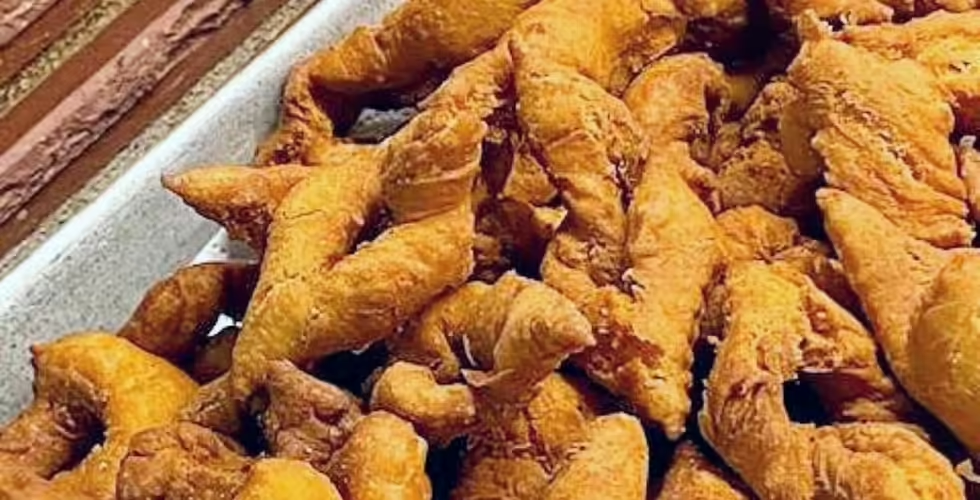
Traditional Icelandic kleinur are golden little twists of fried dough, lightly sweet and flavored with wonderful cardamom. They’re a bit cake-like and just right alongside a cup of coffee.
My mom was born in Iceland, and I grew up making kleinur. They’re a delicious part of my Icelandic heritage, and I especially love how they smell while frying. A warm one, eaten plain, is hard to beat. I’m always ready for another!
You’ll find kleinur in bakeries and supermarkets throughout Iceland, but I love homemade ones best. The dough is simple, with no yeast or rising time. Once you learn the little pull-through twist that gives them their shape, you’re ready to fry a batch.
Put the coffee on, and I’ll show you how we make them!
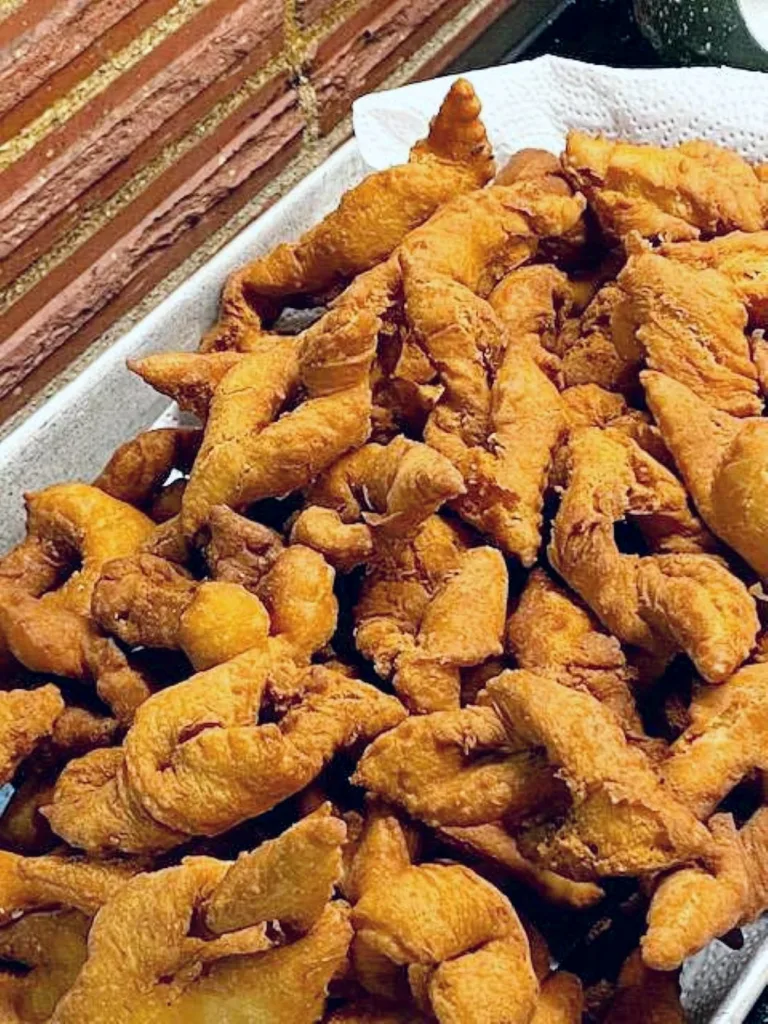
Kleinur is the Icelandic name for traditional sweet fried bread. You can find them in every Scandinavian country, but each country has a unique name for this popular treat.
The distinctive twisted shape and cardamom flavor set Icelandic Kleinur Apart from similar pastries in other cultures. The process is similar to doughnut-making, but a few unusual characteristics make Icelandic kleinur so beloved in that tiny country.
There is something extra special about the Icelandic version of these "twisted doughnuts." They have a wonderful aroma when they fry. The secret is the cardamom and, sometimes, a little bit of nutmeg in the kleinur's dough.
In some Scandinavian countries, kleinur are a holiday treat, but in Iceland, they're a staple. They pair well with coffee, and you cannot go anywhere in Iceland, day or night, without coffee. Coffee is ever-present. Where there is coffee, there are kleinur. Icelanders eat them by the ton.
Sometimes people call kleinur "twisted donuts," but kleinur really aren't at all like donuts. They are not very sweet, and they are more substantial and cake-like than wimpy American donuts. In Iceland, they are seldom, if ever, glazed, frosted, or embellished.
The dough is simple and straightforward. I usually make it and refrigerate it until the next day when I plan to fry them, but it's not really necessary. Roll out the dough on a well-floured surface. The thickness is up to you, but we usually roll ours out to a little less than 1/4 inch thick, similar to sugar cookies.

I grew up making kleinur, so I got a pastry wheel along the way and use it to cut my kleinur. Mine is old and a bit wobbly, but you can get a shiny new one for around five bucks and use it to make all kinds of beautiful pastries for the rest of your life!
I've never used a knife to cut them, but I think it would work fine as long as you flour the surface. Cut the dough into strips about 1 1/2 inches wide. (I use my two fingers as a guide.) Then, make second diagonal cuts and create diamond-shaped pieces.
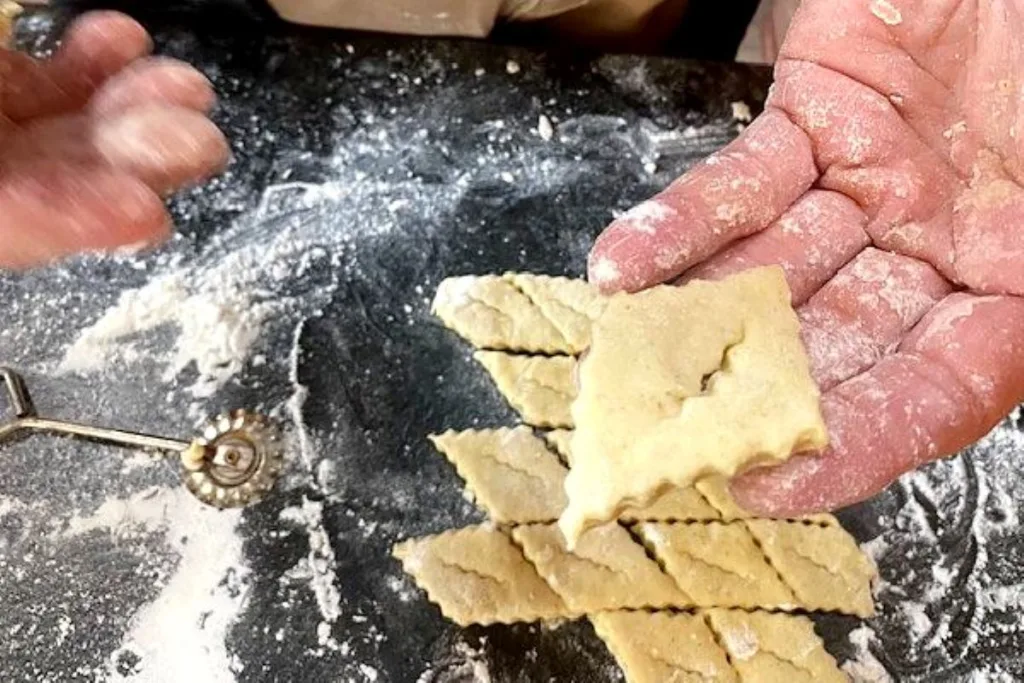
Next, cut a slit in the center of each piece of dough and pull one end through the slit to form a classic kleinur-shaped knot. You are ready to fry! You can gather up and reroll any dough scraps to make more kleinur, just like when you make sugar cookies!
Icelanders have made and eaten kleinur for centuries. They were originally fried in sheep tallow, similar to lard, in heavy iron kettles over a fire. Every family had a kettle like it for making kleinur, and many were heavily crusted on the outside with years of residue from hot grease.
Choose a neutral cooking oil, like sunflower or canola. I like to use a thermostatically controlled non-stick cooker/fryer. The gadget actually comes in pretty handy because you can also use it to boil pasta or potatoes when you need an extra burner. We tried air frying some last fall with disappointing results. Just a heads-up!
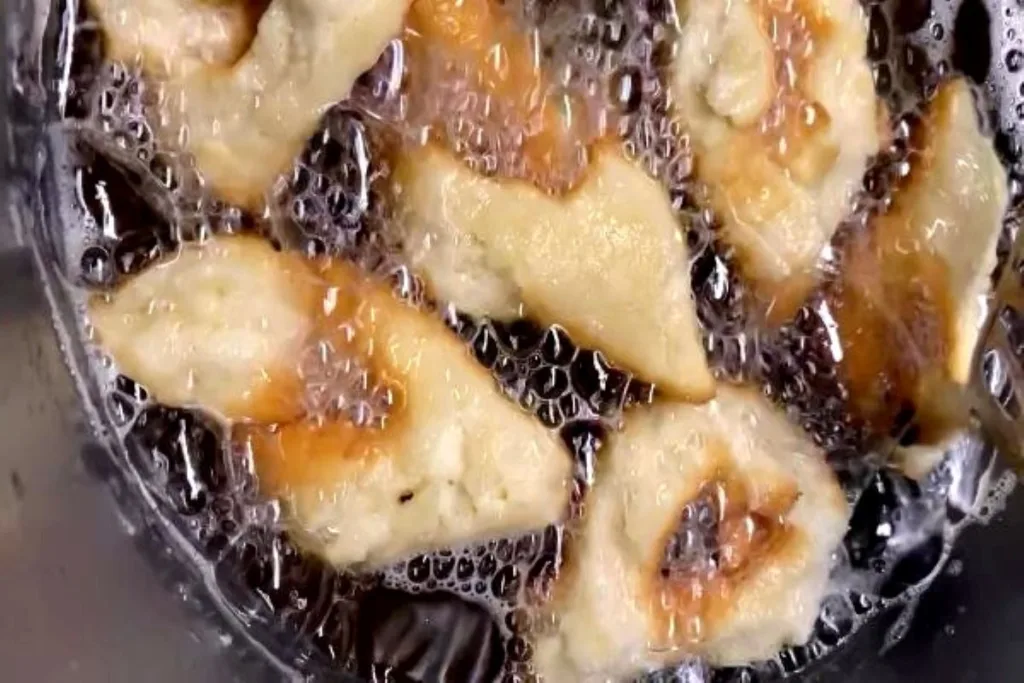
Heat the oil to about 375 degrees. Carefully drop kleinur in the hot oil a few at a time. Don't crowd them. They cook very quickly. When they pop to the surface and the bottom side is browned, you can flip them over easily by pressing a spoon on one edge. Brown the other side, remove them with a slotted spoon, and place them on paper towels to drain.
If you like, dust them with powdered sugar or cinnamon sugar right after you pull them from the fryer. I like mine plain, and I eat them with reckless abandon when we make them because they are not too sweet. We jokingly said our Icelandic mama could eat her weight in them if we let her!
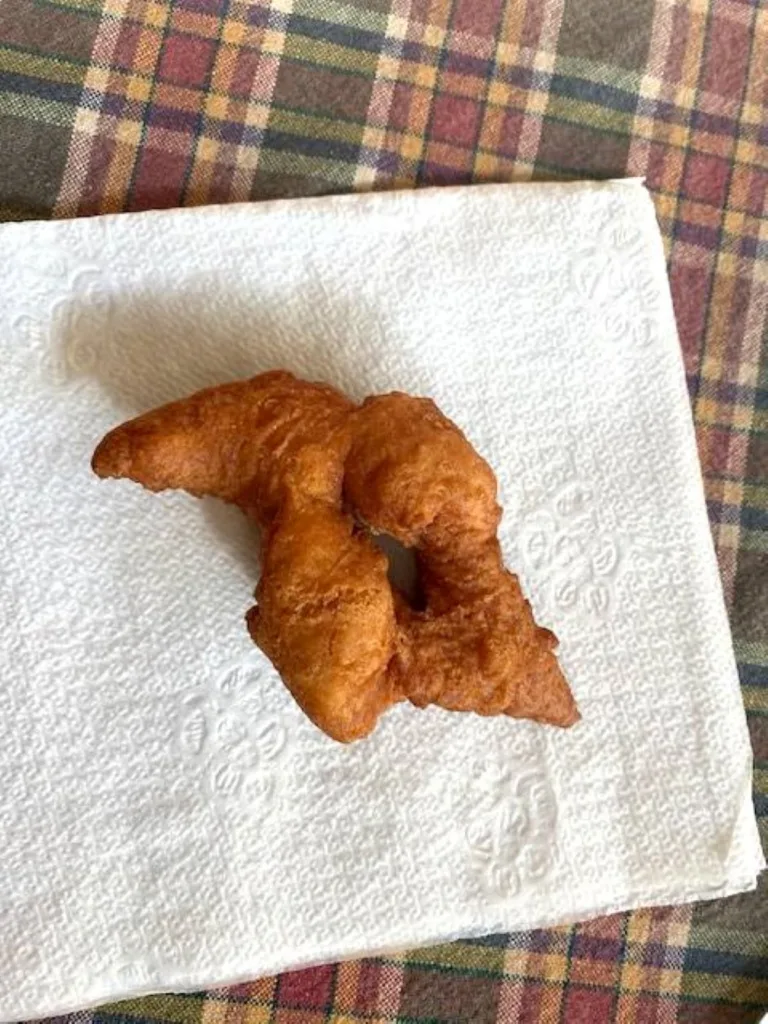
This is a kleina. That is the singular form of this famous twisted donut's name. You rarely see that word because almost no one can stop at one. I dare you!
Have you ever eaten kleinur? Have you ever been to Iceland? If not, I encourage you to do both! It is a fascinating country that is both ancient and modern. The capital, Reykjavik, is naturally warmed by the Gulf Stream, so the average annual temperature is about 33 to 35 F in winter and about 54 F in the summer.
I always like to compare Nebraska temperatures with Reykjavik's in the winter. It is often warmer there! I must add that the mostly uninhabited parts of the island country away from the Gulf Stream are quite frigid!
Even if you never visit Iceland, we hope you will try making a batch of Icelandic kleinur and send us pictures when you do!! You may just start a new holiday tradition!

Traditional Icelandic "twisted donut" that is spiced with cardamom and deep-fried.
You can make this dough and refrigerate it the day before you fry the kleinur if you want, but it is not necessary.
Another favorite food from Iceland and part of my Icelandic heritage is Butter Baked Cod! On the Danish side of my family, we all love Frikadeller, Red Cabbage, and Danish-style Cucumber Salad!
If you liked how this recipe turned out, I'd love it if you left a ⭐⭐⭐⭐⭐ review or dropped me a note in the comments! It really helps my little business connect with people who cook and eat the way we do. Thanks! ❤❤
Love, GB (Betty Streff)
Real food. Real kitchen. Real easy.
Be the first to get GB's newest recipes, once a week. Unsubscribe anytime.

Welcome to the kitchen. GB's next recipe will land in your inbox soon.
Sign up for my newsletter and receive a free gift! A printable sign that would look great in your kitchen, framed above your sink, or just placed anywhere to remind us how lucky we are to have dirty dishes!
 Sign up now!
Be the first to get GB's newest recipes, from weeknight dinners to fall desserts, plus a few kitchen tips along the way.
Liked this one? Get GB's newest recipes every week.
Welcome to the kitchen. GB's next recipe will land in your inbox soon. Now, back to that recipe.
